

On being _technically_ correct
The 'right' answer that fails to deliver is actually the wrong answer. People often confuse winning arguments with winning results. Those who drive the most impact aren't necessarily those with the most correct answers,...
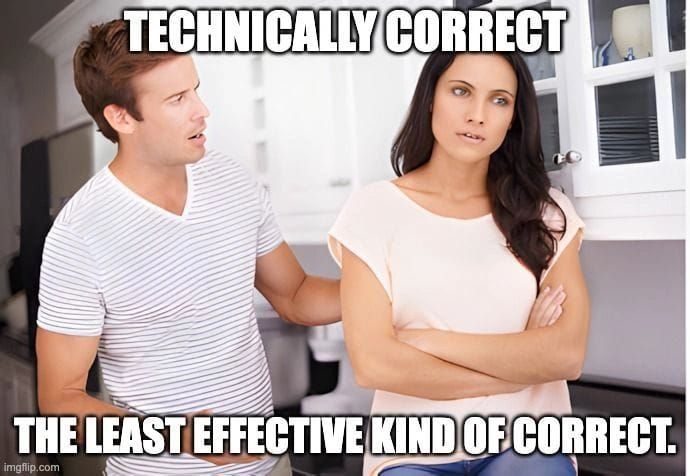
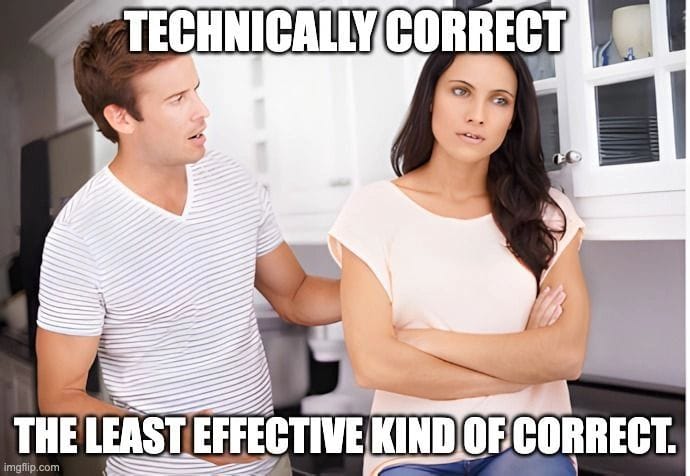
The 'right' answer that fails to deliver is actually the wrong answer.
People often confuse winning arguments with winning results. Those who drive the most impact aren't necessarily those with the most correct answers, they're the ones who prioritize outcomes over being right.
The path to success is rarely just about having the correct solution:
Building consensus matters more than winning debates. When you bring others along instead of shutting them down, your ideas actually get implemented rather than resisted. The "perfect" solution that nobody supports is effectively worthless.
Context beats correctness. What works beautifully in theory often falls apart in the messy reality of organizational constraints, existing systems, and competing priorities. The best outcomes are from solutions that acknowledge and work within real-world limitations.
Relationships outlast individual decisions. Pushing your "right" answer at the expense of burning bridges might win today's battle but lose tomorrow's war. The most effective leaders know when to concede smaller points to preserve the relationships that drive long-term success.
Adaptability bests rigidity. Duh. Clinging to what you "know" is right blocks you from seeing new information or better approaches. Sometimes the right outcome comes from letting go of your initial "correct" answer.
By focusing less on being right, you often end up getting better outcomes. The question isn't "Am I correct?" but "What approach will actually solve the problem effectively?"
As I...ahem... get older, I've shifted from valuing being right to valuing getting it right. They're surprisingly different skills with dramatically different results.