

3 keys to the enterprise for AI-first startups
When OpenAI released ChatGPT in November 2022, the average consumer saw an overnight success heralding a new age of rapid technological growth. But the widespread lack of understanding around the technology makes for ...

When OpenAI released ChatGPT in November 2022, the average consumer saw an overnight success heralding a new age of rapid technological growth. But the widespread lack of understanding around the technology makes for an uphill battle to build enterprises' confidence in these solutions’ security and privacy.
Meanwhile the state of the art is accelerating, with over 2000 papers published in the past month alone, joined by hype that makes Taylor Swift’s tour look like an underpromoted coffee shop performance. As a result, every AI-first startup faces an extra critical eye as they approach the hallowed gates of the enterprise.
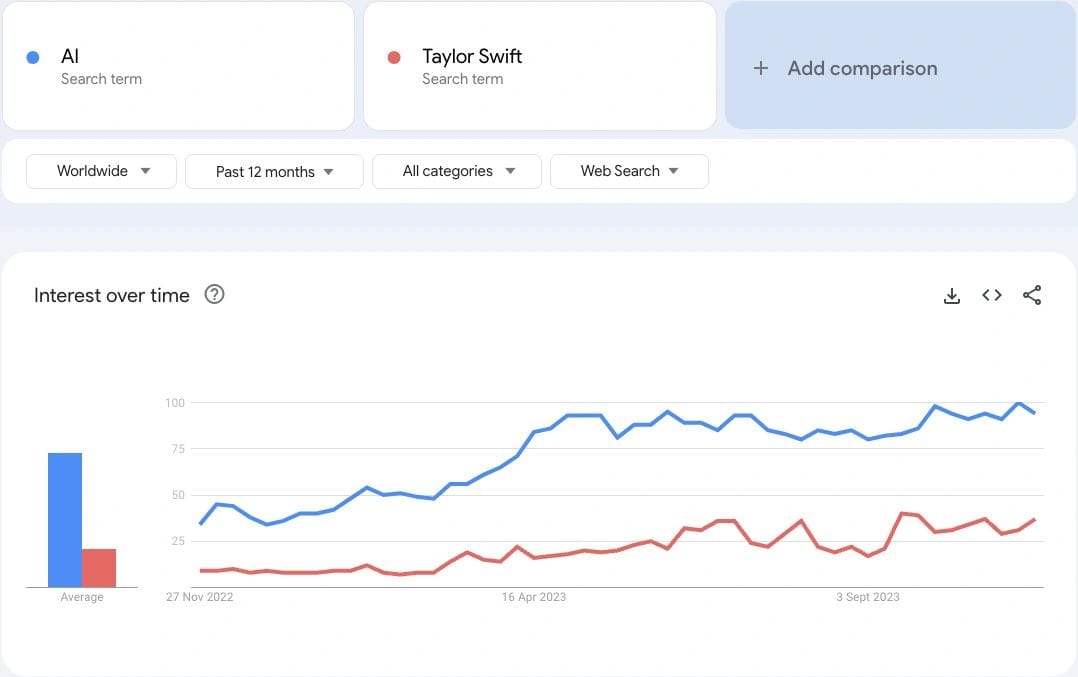
Fig 1. Analysis of cultural popularity of AI vs Swift. AI dominates despite frequent hallucinations
Organizations’ third party risk management tends to rely on reports like SOC 2 to assess security requirements. Larger enterprises will add audit reports to evaluate compliance but will have bigger teeth in the form of security addendums and contractual obligations.
Unfortunately, those same contracts haven’t caught up with the types of issues that LLM based software is uniquely susceptible to.
They may cover vulnerability management requirements, encryption at rest and, god forbid, password rotation policies – but have yet to address issues like prompt injection prevention, how models are trained, who owns the weights of a model trained on customer data, and a dozen other concerns that only arise with this next generation of software.
This can greatly lengthen sales cycles by creating long back-and-forths with legal and security teams who all want to make sure they aren’t inadvertently approving tomorrow’s data leak.
Enterprises won’t dig much into the controls that back their new Microsoft copilot lifestyle. They're a trusted strategic partner with more AI talent in their nap pods at any given time than most of their customers could ever hope to have on staff so customers will take it as a given that it’s well built.

Fig 2. A very accurate and not-at-all-fake depiction of Microsoft’s AI team recharging mental prowess
For those without the resources to casually offer to absorb the world’s hottest company over a weekend, being able to clearly and proactively communicate architectural choices necessary for a “secure-by-design” system is now more important than ever.
But how do we convert this knowledge gap into a unique selling proposition that sets you apart in the hyper competitive landscape?
Collaborate Early and Often
Ensure early and frequent collaboration between security architects and product/engineering to design the systems in a way that fundamentally addresses LLM specific concerns like those in OWASP’s LLM Top 10 and AI Privacy and Security Guides.
Translate Tech into Tales
Once the technical groundwork is laid, it's time to bring the narrative to your audience. Get your product marketing teams to partner with your engineers to demystify AI risks. They need to translate your technical measures into compelling content that informs your audience. These should transform the complexities of AI risk and your robust countermeasures into narratives that resonate with and inform your customers.
Reinforce Contracts with Confidence
With the technical and narrative pieces in place, the next step is to solidify your commitment through your contracts. Bring in the legal team to ensure your own security addendum addresses these risks in a way that gives the buyer confidence in the guarantees provided by your solution. Don’t forget to add all the classic requirements, they haven’t gone anywhere and will be expected to be covered lest you be forced to default to the dreaded customer paper.
Remember above all, this isn’t a totally new process, it’s just about anticipating questions to minimize unnecessary back-and-forth. By addressing the education gap head-on, your organization can minimize the cycles with security and legal teams, streamline the sales process, and empower customers with the knowledge of what AI can and can’t do. Taking these simple steps can have a radical effect on customers’ confidence and certainty – and ultimately help them get the benefits of your solution in place to make a real difference in your business.